
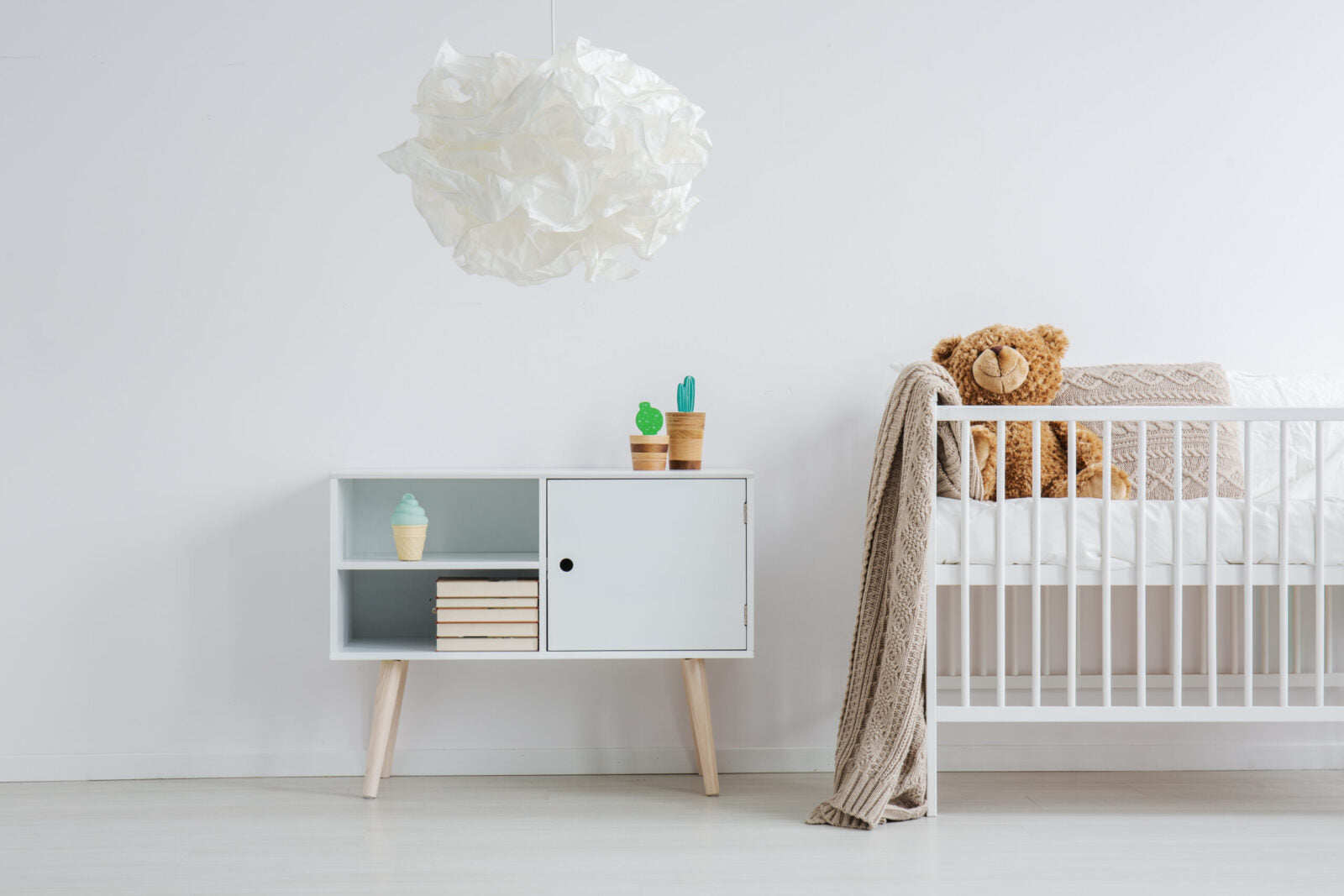
Whether you’re preparing for your first child or adding another bundle of joy to the family, pregnancy is an exciting time for many women. The anticipation of the joy set to enter your world can be heart-warming, but we also know it can be overwhelming at times. It’s a unique period filled with anticipation as you eagerly await bub’s arrival.
For many parents-to-be, this means buying teeny tiny clothes, baby proofing the home, and reading (or rereading) books about parenthood. But, for many women, at some point in the pregnancy journey this urge to prepare may become heightened, energising them to organise, decorate and declutter.
It’s a process commonly known as the nesting instinct. But, why do women nest and when does it usually kick in?
What Is Nesting?
Nesting has no concrete definition but generally speaking it’s characterised by an overwhelming urge to prepare your environment for your new baby. Some parents-to-be report waking up one day feeling energetic and eager to reorganise the home, thoroughly scrub the kitchen, or decorate bubs’ nursery.
Rest assured, it isn’t some kind of parenting trend, it’s a common and innate inkling that many women feel prior to giving birth.
In fact, this instinct happens across the animal kingdom, with many species preparing a den to ensure their offspring’s comfort and safety upon arrival. For birds, this looks like meticulously constructing a nest up in the treetops while for other animals it may mean constructing an underground burrow.
For humans, it isn’t quite as extreme and every woman’s experience with nesting is unique. It isn’t necessarily about overhauling your entire house before bubs arrives. Sometimes, it can be as simple as wanting to spend more time at home.
Why Does Nesting Happen?
Research suggests nesting may be an evolutionary biproduct, rooted in creating a protective environment for mum and her unborn baby (4). After all, at its core nesting is about taking control of your surroundings. This may also involve deciding where you would like to give birth and who will be welcome in the birthing environment.
Nesting is rather a reminder of our primal connections and desire to connect with our child before it is even born (2).
The exact cause remains unknown, but it’s been suggested that it may be associated with the hormonal changes associated with pregnancy (4). Some people also speculate that nesting is a technique for establishing order during a new and uncertain time.
An increase in adrenaline around the 38 or 39-week mark may also contribute to feeling ready to spruce up your home, but the emotional urges can be just as prominent (5).
When Does Nesting Usually Occur?
Like most aspects of pregnancy and parenting, every mother’s experience with nesting is unique. For some expectant parents, it may begin as early as five months into the pregnancy while for others, it might not kick in until the weeks leading up to their due date. It’s also common for some mothers to never feel a desire to nest.
Generally speaking, pregnant women tend to experience their strongest nesting tendencies in the third trimester.
Nesting can also be a fun activity for strengthening your relationship with your partner. Why not try undertaking the following nesting tasks, as a pair(3):
- Painting the nursery
- Shopping for baby clothes
- Collecting a library of baby books
- Assembling furniture, like the baby cot.
At the end of the day, regardless of the activities you partake in, keep in mind that nesting is all about getting prepared in which ever ways best suit you.
What's Next?
Have you found this information helpful? If so, you may enjoy the following:
References
- American Pregnancy Association. (2013). Nesting During Pregnancy. [online] Available at: https://americanpregnancy.org/planning/nesting-during-pregnancy/#:~:text=This%20urge%20to%20clean%20and [Accessed 7 Jul. 2020].
- (2019). What Is Nesting During Pregnancy, and Does It Mean Labor Is Imminent? [online] Available at: https://www.healthline.com/health/pregnancy/nesting#causes [Accessed 7 Jul. 2020].
- Bupa (2020). [online] Available at: https://www.bupa.com.au/healthlink/family-and-pregnancy/pregnancy/pregnancy-stages/giving-birth/seven-early-signs-of-labour-what-to-look-for [Accessed 7 Jul. 2020].
- Anderson, M.V. and Rutherford, M.D. (2013). Evidence of a nesting psychology during human pregnancy. Evolution and Human Behavior, 34(6), pp.390–397.
- Jablonski, N. (2019). 9 To-Dos for When You Feel Like Nesting. [online] Available at: https://www.whattoexpect.com/pregnancy/labor-and-delivery/preparing/nesting-phase.aspx [Accessed 8 Jul. 2020].%MCEPASTEBIN%

